


Getting Close

Walker is officially out of my hands and off to the formatting gurus at 52Novels.
I won’t lie, it feels pretty damn good. And it means that we’re still on track for the 11/15 release date.
Whew.
Working in the Word Mines – Software
Let’s talk about writing tools. You don’t really need anything more than a text editor to get the job done, but unless you’re a real stickler for the minimalist approach, there are a lot of options out there to lighten your load.
Being a nerd, of course, I’m always tempted to optimize everything to within an inch of its life. That usually means trying to find the perfect tool for every job, or trying to cram every job into a single do-everything tool. It turns out that neither approach works very well for me, so I’ve settled on using the smallest number of tools possible to get the job done.
Here’s a look at what I’m using:
Research, Recording Ideas – Evernote

I used to carry around a Moleskine notebook so that I could jot down random ideas and thoughts whenever and wherever I might be when they struck. This had two problems: going back to look for something sucked, especially across multiple notebooks, and having my ideas on paper and my associated research on the computer.
Evernote lets me use my phone when I’m out and about instead of a notebook, which means one less thing I have to lug around, and access my notes from anywhere. And the search is incredible. It even has the ability to make text in a picture searchable, which is pretty dang cool. And since I do 95% of my research on the web, it’s easy to clip anything I find into Evernote and tag by related topic. Now my notes and research are all in one place, and I can actually find stuff when I need it.
Brainstorming, Plotting – Springpad

Evernote is awesome for collecting notes and research, but it’s missing one thing that I need: index cards. When I’m working out the plot for a book or a series, I like to write down events and scenes at a high level and lay them out in front of me so that I can visualize the flow of the story. I also like to shuffle them around when I make changes. Using index cards like this is a common technique, and there are a ton of software alternatives to carrying around an actual pack of paper cards.
Unfortunately, most of these alternatives are based on particular tools that can only accessed from a specific location or device. Springpad neatly solves that problem by having an index card ‘corkboard’ in their web interface, as well in their apps for IOS and Android. For me, the best part about Springpad is being able to get away from the PC and noodle on the plot on my iPad. The board interface is beautiful and very touch friendly. Perfect for lounging around somewhere pleasant and thinking.
Now I have a place to do my plotting that’s accessible from anywhere if an idea strikes me, plus I can stick my brainstorming notes in the same place. The board is just one function of Springpad, in other respects it serves the same purpose as Evernote.
I would have liked to replace Evernote with Springpad to keep the number of tools to a minimum, but the clipping function in Springpad just isn’t up to par. Instead of grabbing the actual content that I want to save, it saves the URL and a screencap of your browser window. That means search is limited to the URL and your tags, and if you want to go back and read it, you need to go back to the page and hope the content is still there.
Information Repository, Timelines – Liquid Story Binder
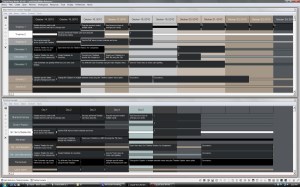
Liquid Story Binder is actually an all-in-one writing tool. It has functions for everything under the sun, but for me the most useful parts are dossiers and timelines (shown above). Take a look at their site to get an idea of what it can do.
I used to use LSB for plotting as well, but since it’s a PC only program, I always had to be at my desk to get things done. Now that I’ve discovered Springpad, I may drop this. I find that if I do my index cards right, I don’t really need a separate timeline.
If you’re looking for an all-in-one tool, however, I highly recommend this one.
Writing – Word

Yeah, good old Word. Why not write in Google Docs? Or Liquid Story Binder? Or even Scrivener?
Mostly because I’m used to it and it works well for long-form writing, but also because it’s the de-facto standard when I’m working with editors, proofers, and formatters. You can export from lots of other tools into a .doc file, but without exception, I find that I have to go back afterwards and massage the results.
I don’t use much of the formatting capability that Word has, but what I do use is easy to setup. I typically create a template that I use for each chapter, which is a separate file. So, for each new chapter, I simply open a new doc with that template and I’m good to go. Separating the manuscript into chapter files helps me keep organized and allows for a modular structure that’s easy to work with.
As I said earlier, none of this is really necessary. If I were brutally honest, I could probably get along with nothing but Evernote and Word, and be 99% as productive.
Maybe after this next book …
Maybe I’m a Pomeranian, too
Kuzi weighs four pounds, and likes to sleep perched gently on the back of the couch:

Aw, how cute.
Cher does not weigh four pounds. However, watching Kuzi sleep up there day after day has convinced her that this must be the best napping spot in the house:
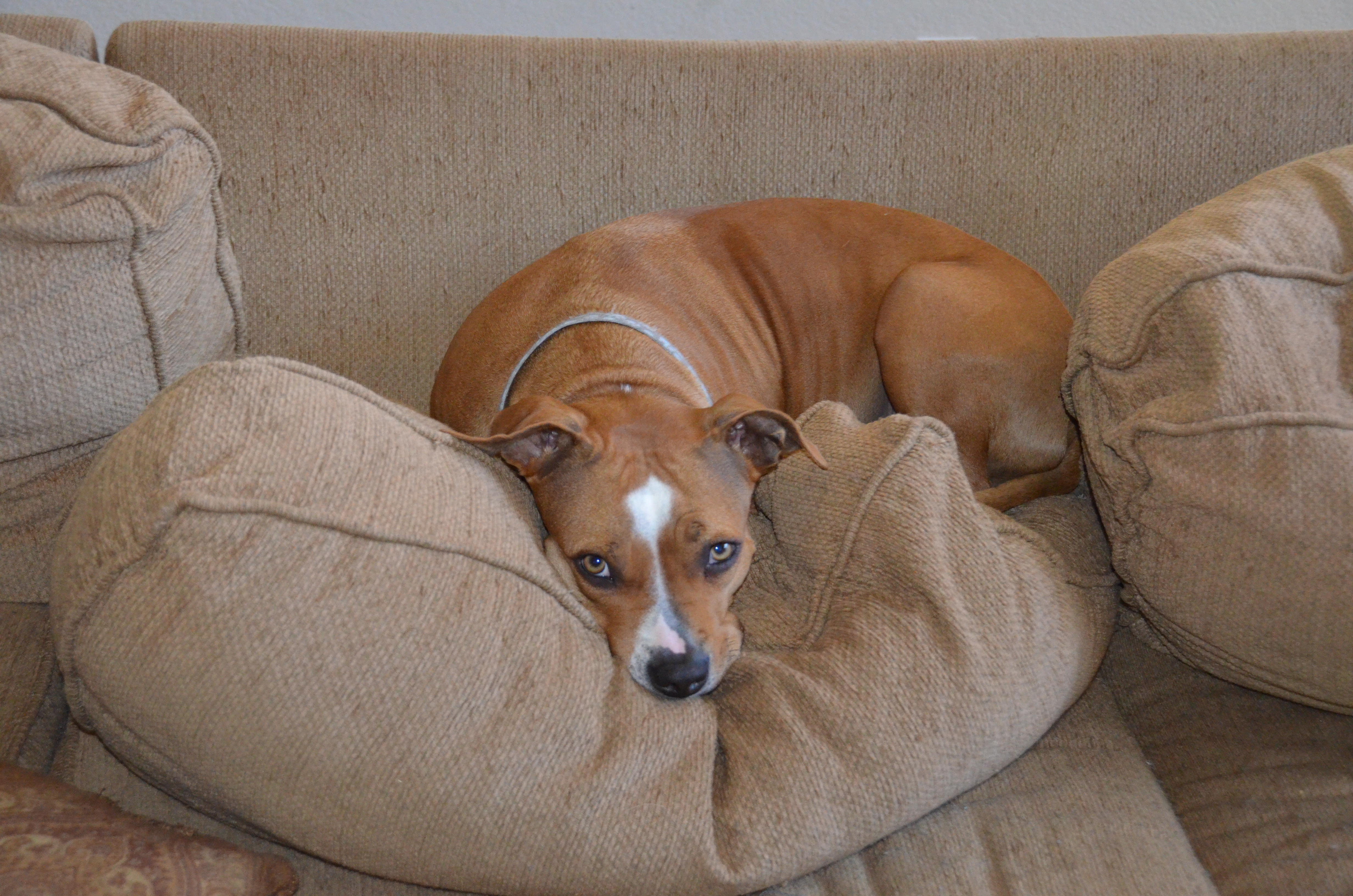
MY COUCH!
Turns out it’s vastly overrated.
Lost My Amateur Status
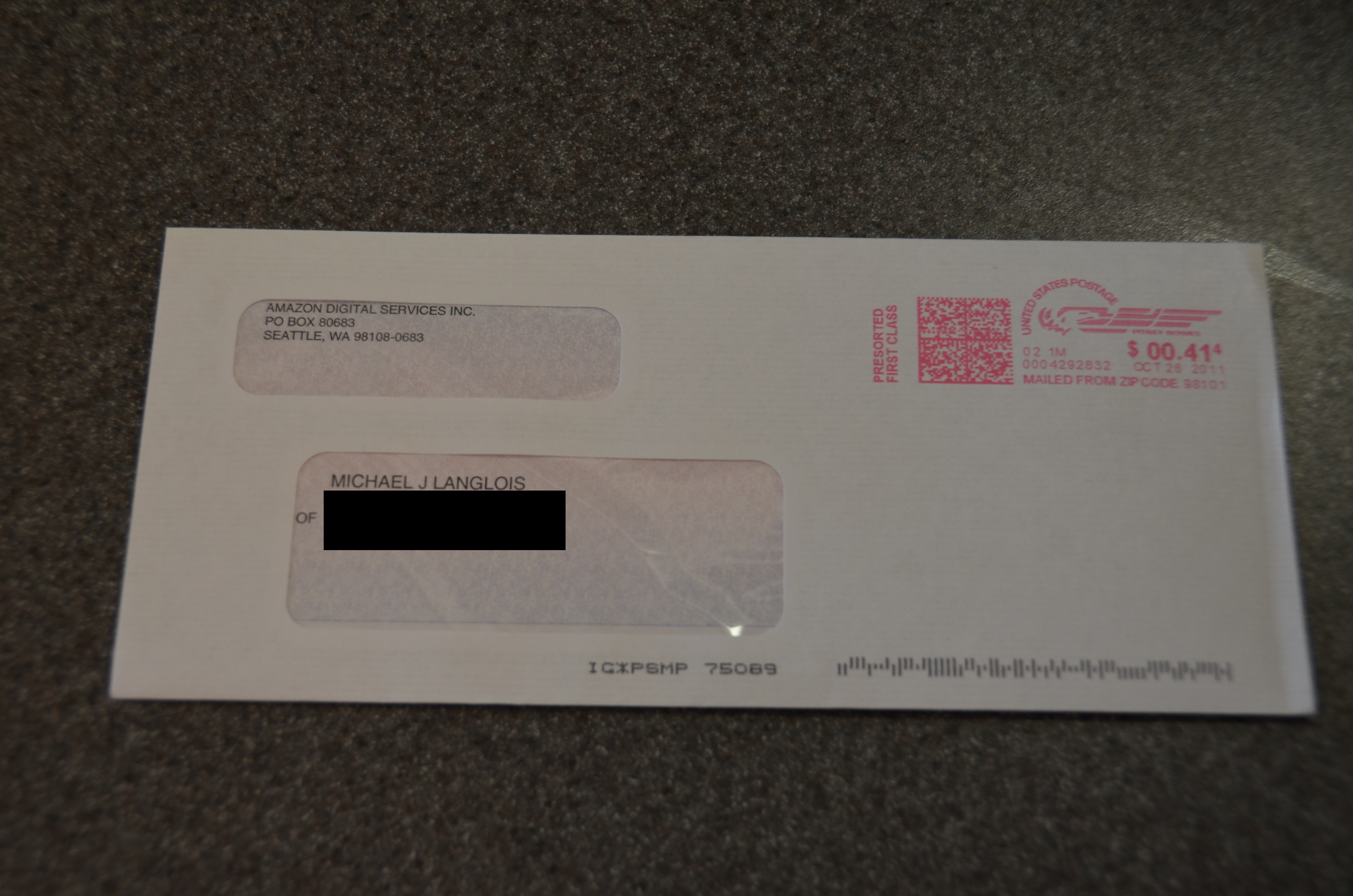
Behold! Bad Radio’s first royalty statement!
It’s a book milestone that every author honors with the solemn dignity that the occasion deserves.
For example, after bringing the mail inside, I proceeded to celebrate via interpretive dance. As is proper. It must have been too emotionally powerful for the wife, however, because she made me swear never to do it again. Ever.
So, due to the unfair restrictions against fine arts in my house, I’ll have to say this the old-fashioned way: My heartfelt thanks to everyone who helped make this launch such a success. I deeply appreciate it.
Cat with Hands
One of my favorite spooky videos: The Cat with Hands, by Robert Morgan.
Everything about this video is perfect, from the acting, to the flawless stop-motion animation, to the creepy, mesmerizing use of sound.
Check it out:
Free Book for All Hallow’s Read
In support of Neil Gaiman’s All Hallow’s Read project, I’m giving away free copies of Bad Radio on Smashwords until Midnight on Halloween!
Neil on All Hallow’s Read:
Simply go to Smashwords and use coupon code: MT52Z
Happy Halloween from all of us here at the Langlois Compound!
Cat, Bat, Skull
Nobody’s going to fall out of their chairs when they hear that, with the possible exception of my Birthday Month(tm), Halloween is my favorite holiday ever.
The best part, of course, is the ritual sugar coma. But right behind that is letting all of my old friends out of the attic to roam free around the house. Allow me to introduce…
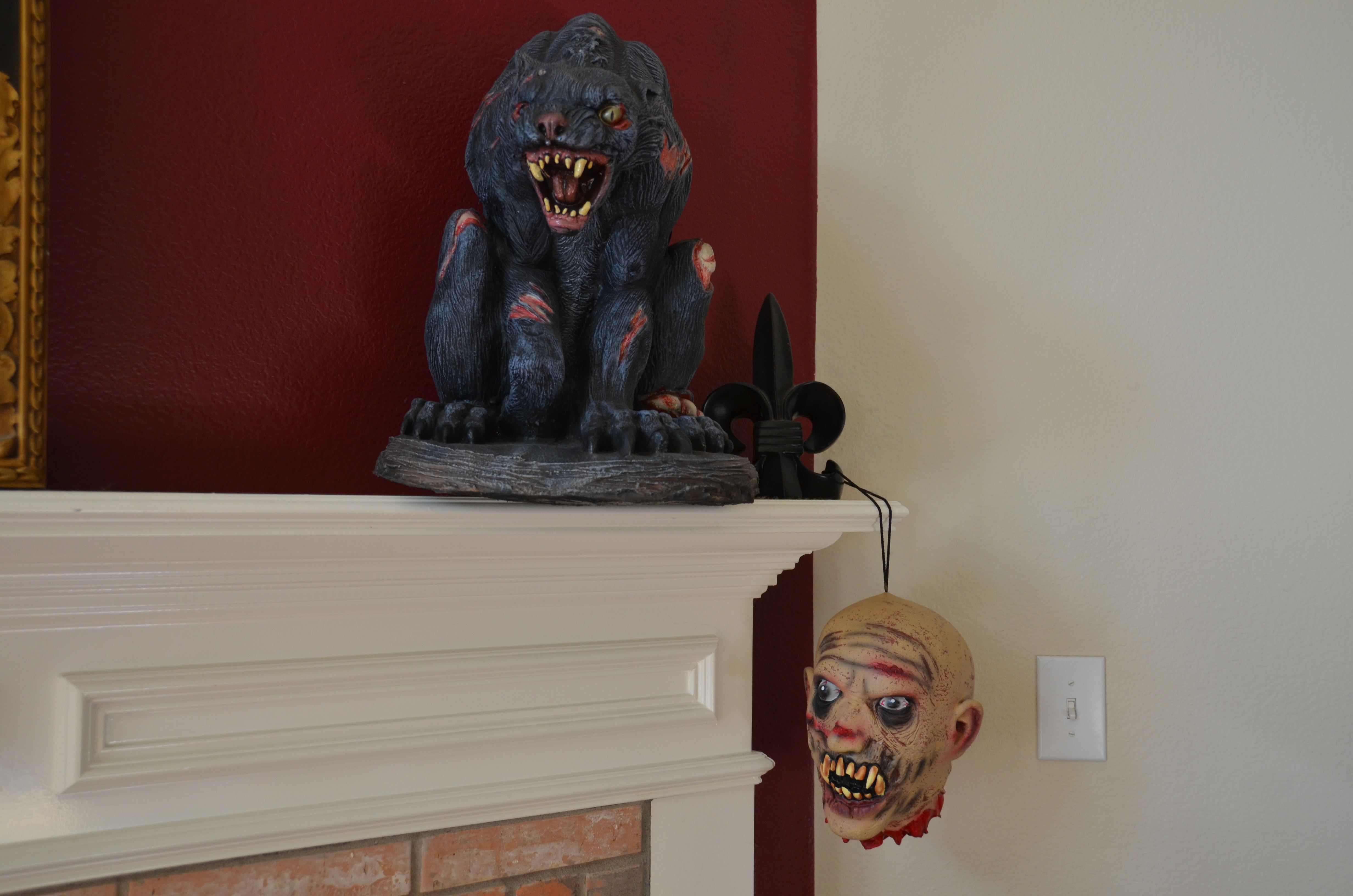
Cat! With pet severed head!
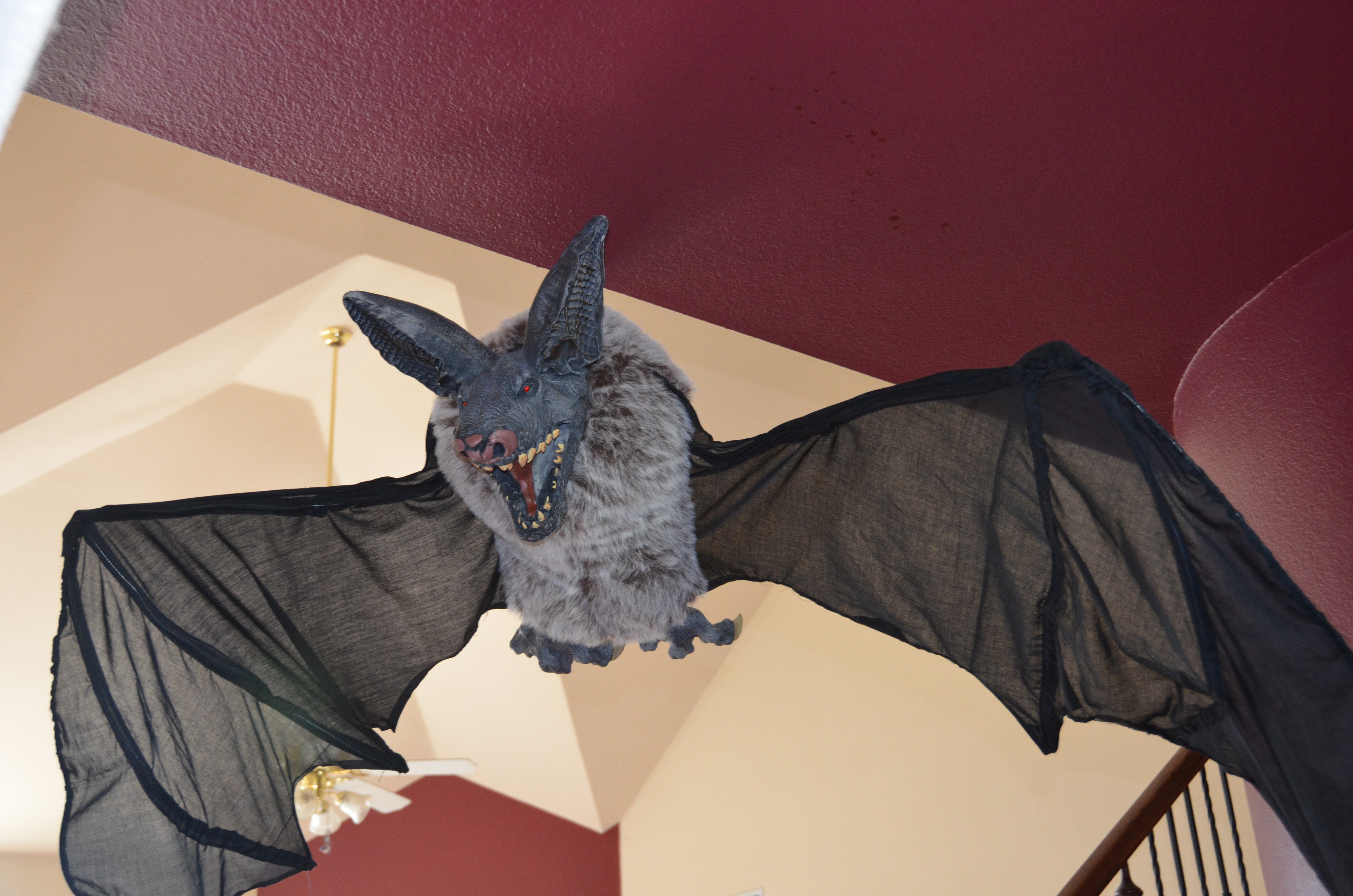
Bat! With command of the, uh, entryway!
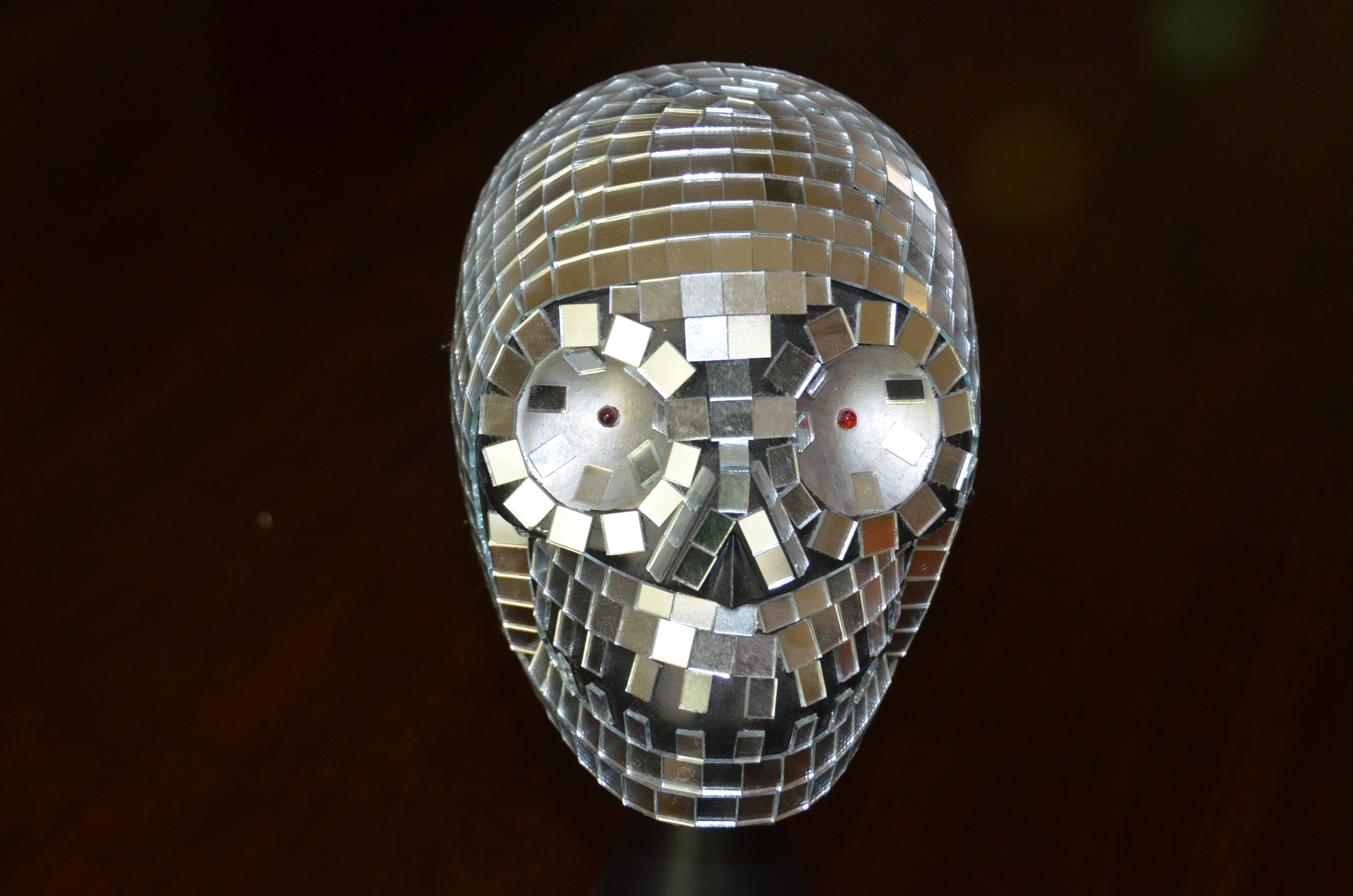
And Disco Skull! Glittery master of the dance floor!
These are the only guys I trust to oversee the army of severed hands, hairy spiders, and assorted spooky bits that will eventually take over the house. They’re smart, good-looking, and dare I say it, my boon companions in this time of shambling horrors and thieving, candy-snatching children.
Yes, I know what you’re thinking. You are twelve years old one lucky guy.
Don’t I know it.
Barry Eisler on Legacy Publishing

Barry Eisler, bestselling author of the Rain series, has a fantastic guest post on JA Konrath’s blog today.
He often speaks about his shift from legacy publishing to self publishing, and exposes why so many other well-known authors are going a similar route. Check out this damning list of behaviors that characterize the lack of competition between the Big 6 publishing houses:
• An identical, lock-step, onerously low 17.5% digital royalty rate
• The practice of forcing readers who prefer digital to wait, sometimes for over a year, until a title is also ready to ship in paper
• Digital retail prices equivalent to paper ones despite the obvious lower costs of digital distribution
• Byzantine and opaque royalty statements, delivered twice-yearly as much as six months after the end of the applicable reporting period
• Non-compete clauses that attempt to preclude authors from meaningful control over their own professional and artistic destinies
• Morbidly obese contracts delivered months after agreement on high-level deal points, written in unendurable legalese and drawn up in nine-point font on 14-inch legal paper, the only purpose of which is to intimidate authors into not reading the document, and to obscure the meaning of what’s written just in case they do
• Payments tendered months after they’ve come due
• A refusal to share sales data with authors, even though authors have long clamored for such information and the web technology to provide such access was already old a decade ago.
The article addresses the fear mongering from legacy publishers that as soon as enough power shifts to Amazon in the publishing space, they’ll become a monopoly and cut royalties. His response? They would have to go a long way to become as bad as the current crop.
Go here for the full article.
Conservation of Focus
Trust me, this place is gonna have the best basketball court ever!
As I’ve said before, I’m not great at taking advice. However, on the rare occasion that a good idea can make it past my thick skull, I like to mention it.
Here are some facts:
- Like physical endurance, you only have so much mental focus to expend on a given day.
- Like physical activities, some forms of mental effort are much more taxing than others.
Duh, right? Folks like Tim Ferriss, David Rock, and Leo Babauta have been preaching this forever. But how many people actually prioritize around these two facts?
I never did. For years, I used time as my only real qualifier for getting work done. Did I have an open spot in the day or not? How long was it? If I could get an hour to write in an otherwise busy day, I’d take it. The dumb part is that I never took into account what I was doing before that slot.
We instinctively understand that an intense weight-lifting session is probably a bad idea right before showing up for your swim competition, but we don’t have a similar grasp of mental activity. We’re told that sitting down to think is just a matter of discipline and time management. And if you don’t get anything done, then you suck and just need to try harder.
That’s crap. You have a reserve of mental endurance, let’s call it focus, and there simply may not be enough left to spend on tasks that have a very high burn rate.
From a writing perspective, content creation, which includes heavy revision, is a high burn rate activity. Do it first, or if you can only clear the time late in the day, be as much of a mental lazy ass as possible before that time (I probably don’t need to mention that I’m an expert on the lazy ass part). Fill the rest of the time with low demand tasks: do some research, answer mail, blog, look up that rule about Oxford commas that you keep putting off. Tweet.
And you don’t have to veg out in front of the TV as soon as you’re too tired to keep up with a high burn rate activity. When a jogger gets tired, they don’t stretch out on the road, they walk. Low demand mental tasks can still be done after you’ve completed the tough stuff, and for a much longer period of time.
If I were clever, I’d do the heavy lifting part of my writing day early so that I’m sure to get it in. Unfortunately, I hate mornings, so I try to conserve until later in the day. If I know that I have to do a lot of braining (it’s clearly a word, I just used it) before my normal writing slot, then I’ll suck it up and write earlier.
Also, if your day job is going to require a ton of focus on a particular day, give yourself the option of sticking to the low demand stuff. Recognize that you may not be able to sustain two high burn activities in one day. It’s cool, you’re only human. A word of caution: there’s a difference between entertainment and rest. High involvement video games, especially multiplayer stuff, is not a recovery tactic. It can easily be a high burn activity.
All of this is obvious in hindsight. I just never put two and two together and actually made a conscious effort to protect my reserve of focus, and spend it in the right place. That one change made a huge difference in the time it takes me to write a book. As in about fifty percent huge.
Bottom line: If you’re in a creative business like writing, give some thought to the conservation of focus. It really does make a difference.


 Fugitive Prose