


Sneak Peek: Walker Cover Art
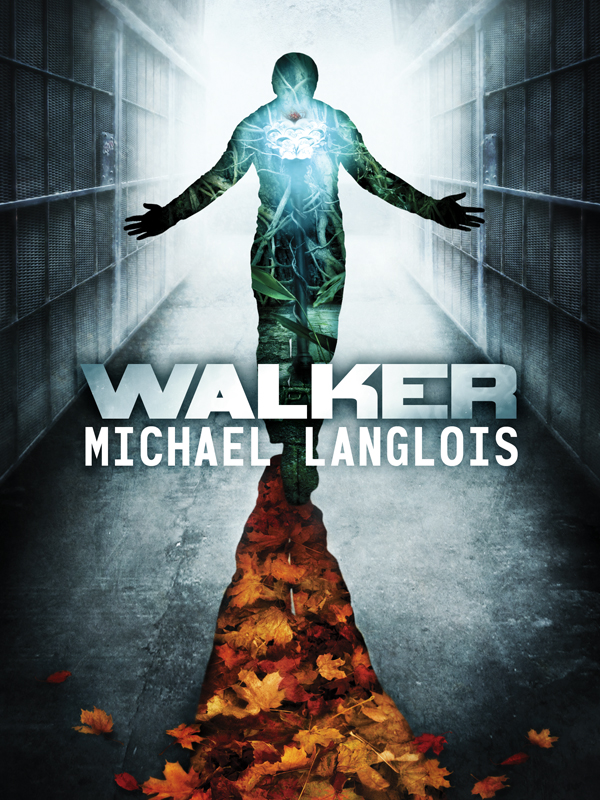
Click for full size!
Just fantastic. Amazing.
Walker is scheduled to be released in just over a month, so things are pretty hectic right now. Art, editing, and formatting are all in various stages of completion, so there’s a lot of juggling going on to make sure that everything comes together at the same time.
That said, of all the moving parts, getting the final cover art is a huge milestone, and one that I wanted to share.
A couple of notes about how Vinny works: He asks for detailed information about the book, covering both plot information and detailed descriptions of any relevant scenes, characters, or items. This can amount to a hefty amount of information, including a full synopsis and lots of excerpts from the book. He then asks me for any ideas that I might have for the cover.
Once he has all the information, he then turns around and sends me a sketch for something about a million times cooler than the stuff I suggested. At which point I say, “Why yes, let’s use THAT, shall we?”
It’s one thing to be an accomplished and recognized graphic artist, but it’s another thing entirely to be skilled and experienced specifically in the creation of novel covers, which is very much its own discipline.
So, along with sharing this preview today, I wanted to say thanks.
Bad Radio in Print

There’s much rejoicing in the Langlois compound today. Bad Radio is, at long last, available in print.
Behold!

Behind the scenes, it turned out to be no small feat to wind up with one book in two editions. The paper version was actually available weeks ago, but because of the way the two editions were labeled in the system, they were separate entities, with the paper version being very difficult to find without a pretty explicit search.
It’s all good now, and many thanks to the folks representing electrons and paper at Amazon who helped get this squared away.
Cheers!
Proof at Last!
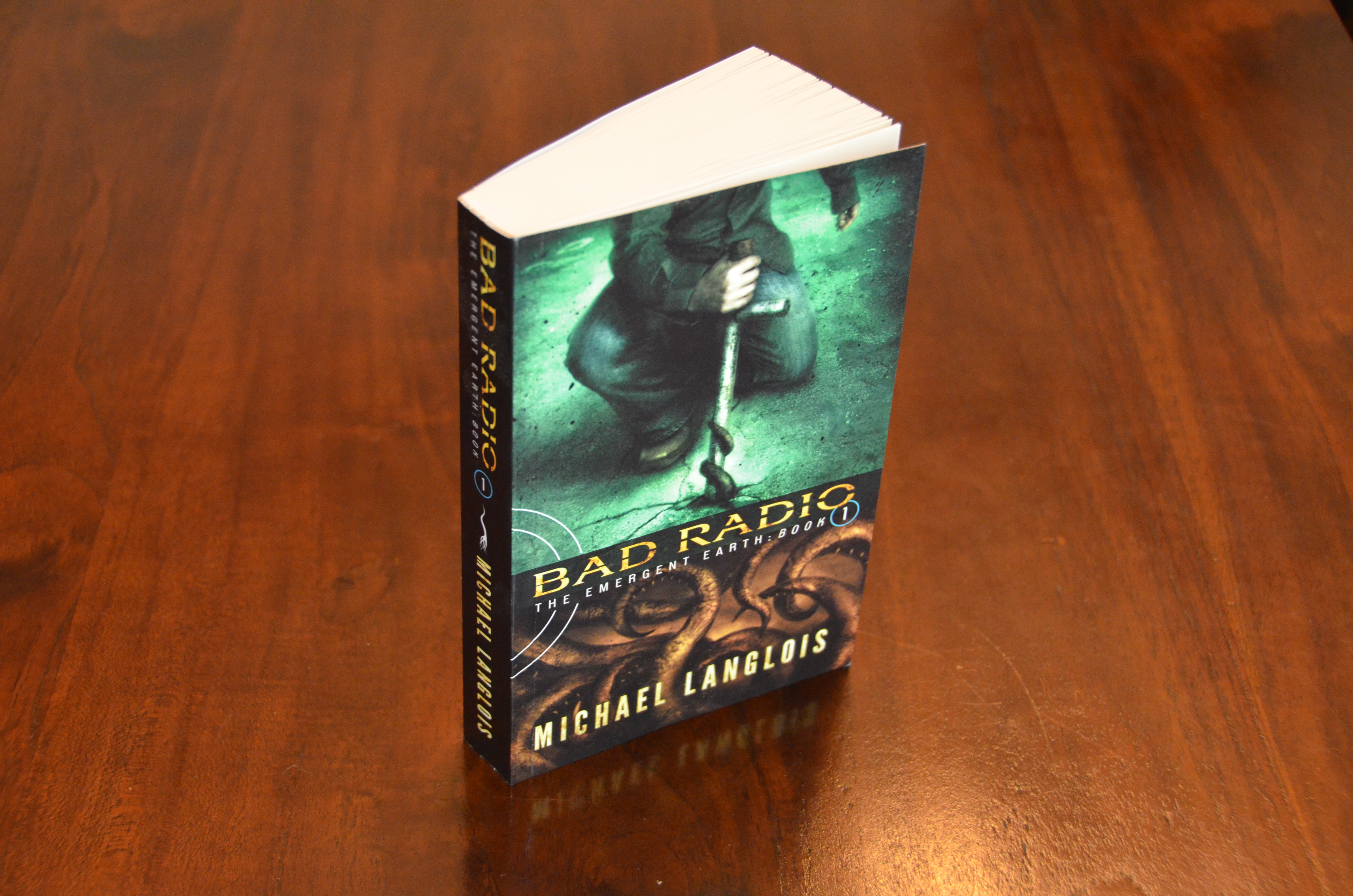
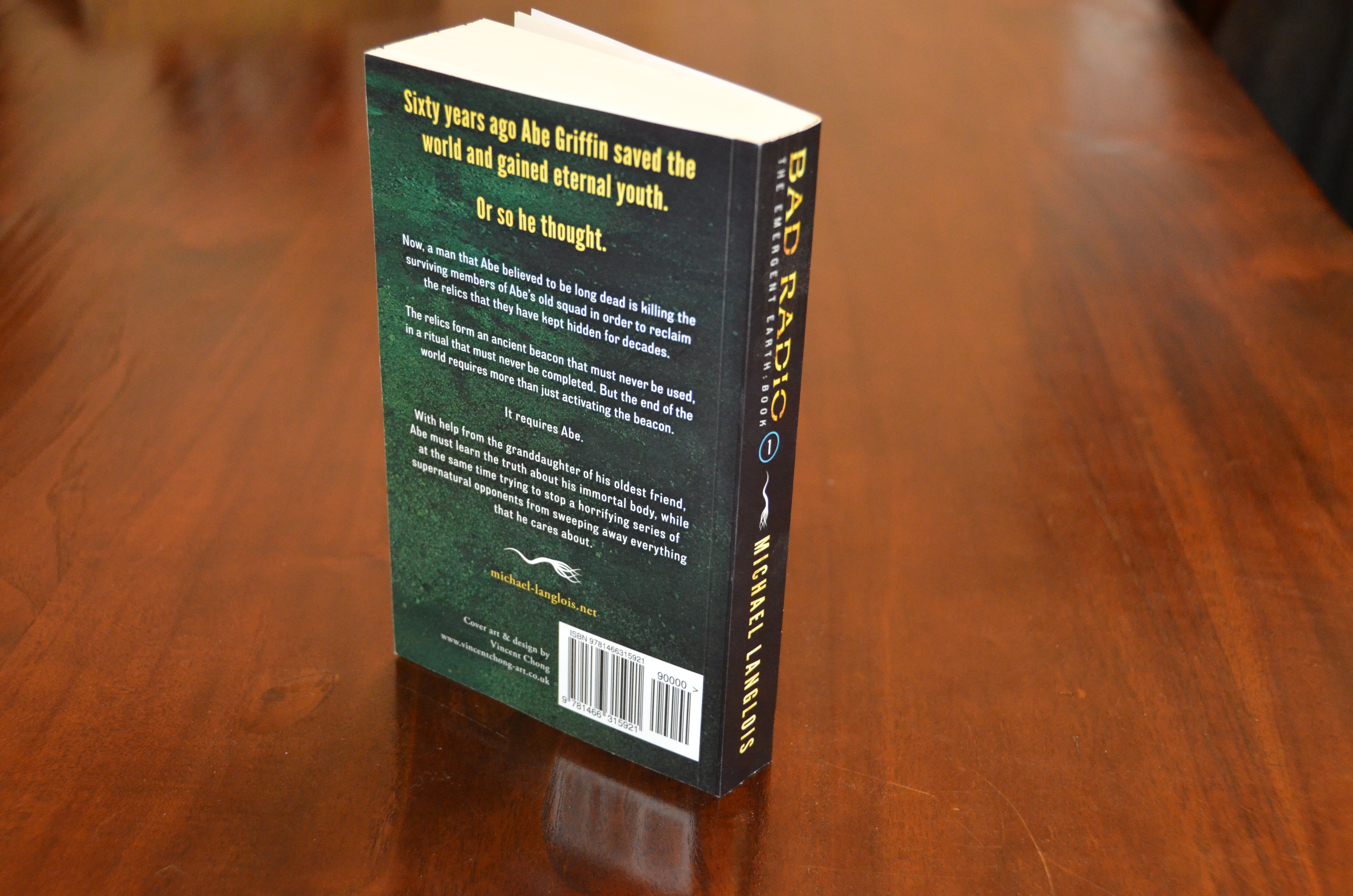
Huzzah! Got the proof copy of Bad Radio today. I have to say, it’s pretty cool having a version of the book that you can hit people with hold in your hand.
So far everything looks great. I’m especially impressed at how crisp the chapter graphics came out.
I’ll review tonight, and barring any crazy errors, it should be available this week. That’s nearly a month ahead of schedule, which ain’t too shabby.
On Editing
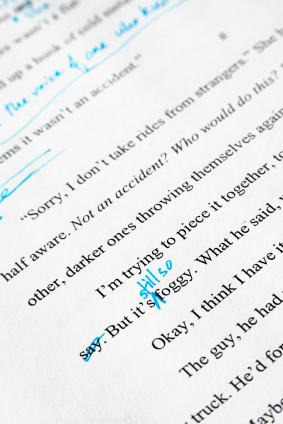
The number one question that I’ve been asked by other writers looking to self-publish is:
Do I really need an editor?
Usually this comes up just after they mention how they read Strunk & White every night before bed, how careful they are, and how their spouse/partner/roommate/dog is an amazing proofreader. And all of that might be true. But the reality is, unless you’re a pro that’s been in the business for years, you’re going to suck compared to an actual editor.
I think my Reddit AMA answer summed it up best when I was asked if I hired an editor or did it myself:
First I did it.
Then my wife (who is a grammar nerd) did a line-edit.
Then I was professionally edited by Scott Nicholson.
Guess what? The manuscript needed the pro editing. I’m fortunate in that I write very clean prose, from a technical perspective. Also, my wife has a keen eye and knows her stuff. Unfortunately, none of that can compare to being edited by a guy who has been in the business as a professional for many years.
Some of what a professional editor will find is technical. You will be so close to your manuscript, and have gone over it so many times, that you will be blind to some of the technical errors. This happens most often in a sentence or scene that you are very involved with from a story perspective. Your focus tends to move to a different place and you just can’t see that dropped apostrophe or whatever.
The bigger value is in what is called ‘developmental editing’. This is the part where your editor points out that something isn’t working from a story/character/pacing perspective. Listen to your editor when they talk about this stuff. Unless you’re a best-selling pro, they know better than you do.
If you can’t afford an editor, and they can run from $1 to $2 per page (250 words), then look for a proofreader that may be less expensive. Failing that, join a well respected writing group, and have several people go over your manuscript.
It’s not ideal, but it’s better than trying to do it yourself.
Ask Me Anything on Reddit
I’m doing an AMA on Reddit right now. Ask me anything!
Update: The AMA went far better than I had expected, with lots of great questions and comments. Thanks, Reddit!
Release Day at Last!
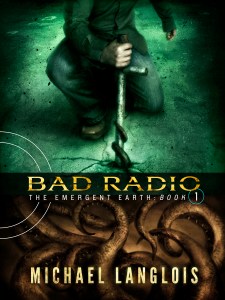
It took a bit longer than I expected, but Bad Radio is finally up for sale!
It’s in the Kindle store on Amazon today, and should hit the Nook store tomorrow. Paper is forthcoming, but will take a bit longer as the wraparound jacket art isn’t complete.
While I’m at the mic, I’d like to clutch a hankie and thank the following people for helping me get over the finish line:
Vincent Chong for the amazing cover art. Odds are that if you like fantasy and sci-fi books, you have his art on your shelves right now. Frankly, I was damn lucky to get on Vinny’s radar, and it’s only thanks to him that I can finally say I have something in common with Jim Butcher, China Miéville, and Ray Bradbury. Check his site and marvel at his covers and many, many awards!
Scott Nicholson for his painstaking editing work and making me look good. Scott is not only a fantastic and thoughtful editor, but an accomplished author as well. As of this writing, one of his latest books, Ashes, holds the #1 spot in the Kindle store in the Horror/Ghosts category, and #7 overall in Horror outside of the Kindle store. I can guarantee that any errors you find in this book are my fault, and had already been pointed out to me by Scott. Twice.
Tina at 52Novels.com for going above and beyond on the Kindle and ePub formatting. I made some “perfectly reasonable” requests, and not only was Tina able to make everything come out better than I had expected, but she also worked through the weekend doing it. She didn’t even call me any of the entirely accurate and well-deserved names that she could have!
And, of course, my wife Susie. Also known as my first reader, line-editor, and the smiter-of-inappropriate-commas. I couldn’t have done it without you.
Thanks, all.
EDIT: I totally forgot to mention Debbie Semple who created the way cool chapter graphic, which is one of my favorite things about the layout. Sorry, Debbie!
John Scalzi on The Business of Writing

Would you ignore advice from this man?
John Scalzi is a great writer. Better yet, he’s a great businessman. Take a gander at his financial advice for writers, then follow it no matter what you do for a living.
Oh, and while you’re over there, take a peek at the rest of his blog if you’re one of the last ten people on the internet who isn’t a regular reader.
Alan Moore on His Craft
There’s a long, fantastic interview with Alan Moore here. If you don’t know who Alan Moore is, uh, I dunno. Sorry.
If you do know who he is, I’m guessing that you’ve already clicked the link and I’m now talking to myself.
Writing Advice from Other People
If you’ve ever looked around for advice on writing, you’ve probably noticed that there are an uncountable number of books, websites, and essays on the subject. There are books by people for which their only writing credit is that very book on writing, and books by superstar authors whose advice is largely anecdotal and serves only to point out that talent is, indeed, just as mysterious as everyone thought.
There is one piece of good advice that all of them have in common. Know this, and you can happily discard 90 percent of the pile.
Write every day. Thinking about writing improves your skill in the same way that thinking about lifting weights improves your strength. Also, you don’t have to be on fire with inspiration to write, you don’t have to ‘be in the mood’, and you don’t have to have worked out every detail in advance. Writing happens when you’re writing. Things take shape and happen on the page in the process, so don’t spend all day trying to come up with it beforehand.
There you go, that’s the most important thing there is to know about writing.
Want to hear it said better? Got you covered.
That said, there are a couple of foundational books/articles/things that I would recommend. In fact, I would go so far as to say, read these, take what’s useful to you, and then go write. Stop reading things about writing for a good long time and just write.
Jim Butcher’s Structure Advice
Jim sat down, and with little to no fanfare, pomp, or circumstance, gave out for free the book and story structure that he uses for everything he writes. And he did it in simple clear terms with examples. You know why? Because he’s AWESOME.
Brian Sanderson’s Lecture on Plotting
You know the guy who finished the Wheel of Time series? Well, he just happens to have some good advice about plotting in this lecture that he gave at JordanCon in 2010. Hint: it’s pretty good.
Story by Robert McKee
The book talks a lot about screenplays, but don’t let that fool you. This is for everyone who wants to understand how stories are built, and why they work.
About Writing by Samuel R. Delany
If you could only talk to one person about the history and creation of literature as an artform, Mr. Delany would be the one.
Hollylisle.com by (duh) Holly Lisle
This site probably has more articles on writing and the writing life, with more meat in them, than any other place I know about. Maybe other places can beat Holly in quantity, but in quality AND quantity? Unlikely. More importantly, Holly is a full time writer who came up the *very* hard way. She knows of what she speaks.
Looking into getting an agent? You probably can’t do better than to ask Teresa Nielsen Hayden of Tor fame and Neil Gaiman. Read all about it here.
And finally, a quick word from Elmore Leonard.
Now get out of here, reading about writing gives you hairy palms.


 Fugitive Prose